
Knee Dislocation
Dislocated Knee Treatment in Ghaziabad at Amicare Sports Injury Centre
A dislocated knee is a joint injury which can make it impossible for athletes and sports persons to do sports, play their game, go for work and even walk. At Amicare Sports Injury & Robotics Centre, we provide dislocated knee treatment in Ghaziabad for sports injury, road accident, fall, and even check congenital knee dislocation which comes from birth itself.
At Amicare, our treatment is managed by Dr. Himanshu Gupta, who is a specialist orthopaedic surgeon having experience of more than 20 years and performing 15,000+ orthopaedic surgeries. If you are looking for a doctor for dislocated knee in Ghaziabad or a surgeon for dislocated knee in Ghaziabad, Amicare Sports Injury Centre tailors every treatment according to your injury, sports and goals.
Emergency note: A knee that looks deformed, is very swollen, has a cold or pale foot, or has numbness below the knee needs emergency care at the nearest hospital straight away. Do not wait for an appointment.
What Is a Dislocated Knee?
Dislocated knee or knee dislocation is a condition where the thigh bone (femur) and the shin bone (tibia) get displaced from their usual position in the knee joint. This injury is caused due to significant force, such as an injury in a traffic accident, a fall, or impact in the sport activities of football or rugby. Ligaments, nerves or arteries near the knee joint get damaged during this injury.
Dislocated knee is unlike dislocated kneecap (patella). Dislocated knee is an uncommon but critical injury and the joint might spontaneously go back to its right position even before reaching the hospital. However, a complete medical examination is essential as there could be some damage to the ligaments or blood vessels even if the knee joint seems alright.
Types of Knee Dislocation
Doctors name the types of knee dislocation by where the shin bone has moved in relation to the thigh bone:
Anterior dislocation
The shin bone moves forward, often from a hyperextension injury or a hard fall.
Posterior dislocation
The shin bone moves backward, commonly from a blow to the front of a bent knee, such as a car dashboard injury.
Medial dislocation
The shin bone moves toward the inside of the knee, usually from a sideways force.
Lateral dislocation
The shin bone moves toward the outside of the knee, usually from a sideways force.
Rotatory dislocation
The shin bone twists and shifts, often involving the outer back corner of the knee.
The type helps your surgeon predict which ligaments and structures may be damaged and plan treatment.
Congenital Knee Dislocation
Congenital knee dislocation is a rare condition in which the knee is out of position, often bent the wrong way (hyperextended), from birth. It can occur on its own or along with other conditions such as hip or foot differences, and early assessment matters.
If you are searching for a doctor for congenital knee dislocation in Ghaziabad or a surgeon for congenital knee dislocation in Ghaziabad, book an assessment as early as possible. Our team will examine your child, explain the options, and coordinate with paediatric orthopaedic care where it is needed.
Signs, assessment and treatment
- Signs: a knee that bends backward, a very stiff or tight thigh muscle, or a visible difference in knee position in a newborn
- Assessment: examination, and X-rays or ultrasound to see the position of the bones
- Treatment: early cases are often treated with gentle manipulation and splinting or casting, and surgery is considered when these do not work
Symptoms and Why Early Care Matters
Dislocated Knee Symptoms: Notice the Signs
Not everyone has every sign, and a dislocated knee can look normal if the joint has already slipped back:
- Severe knee pain right after a strong impact or fall
- A "pop" felt or heard at the time of injury
- Visible deformity or an unusual shape of the knee
- Swelling and bruising around the knee
- Inability to bear weight or move the knee
- Numbness, tingling, coldness or paleness in the leg or foot (an emergency sign)
Risks of Delaying Treatment
Ignoring a dislocated knee can lead to:
- Blood vessel or nerve damage: reduced blood flow or sensation, which can threaten the limb if missed
- Chronic pain: ongoing pain that affects sport and walking
- Knee instability: a knee that gives way and raises the risk of falls
- Secondary injuries: damage to the ACL, other ligaments, meniscus or cartilage
- Early arthritis: joint wear that causes stiffness and mobility problems
Diagnosis of Dislocated Knee
Diagnosis at Amicare Sports Injury Centre combines examination and imaging, led by Dr. Himanshu Gupta:
Medical history
How the injury happened, your sport or activity, and your symptoms.
Physical examination
Checks of knee stability, pulses and sensation in the foot, and tests such as the Lachman and pivot-shift tests once the knee is safe to examine.
Imaging
X-rays to rule out fractures, MRI to see ligament, meniscus and cartilage injury, and scans of the blood vessels when an artery injury is suspected.
Functional assessment
How the knee moves and bears load, to help decide between surgical and non-surgical care.
Dislocated Knee Treatment Options
Dislocated knee treatment depends on the type of dislocation, which ligaments and vessels are injured, and your age and activity. At Amicare Sports Injury Centre we explain the surgical and non-surgical options clearly before you decide.
Emergency Care
The first step is to put the joint back in place (reduction) under medical supervision, check the blood supply and nerves, and support the knee in a splint. This is done urgently, often in a hospital emergency setting.
Surgical Treatment
Most true knee dislocations involve torn ligaments, so surgery is often considered:
Ligament reconstruction or repair
Replacing or repairing torn ligaments such as the ACL, PCL or the ligaments on the sides of the knee. You can read more about ACL tear and reconstruction and knee ligament surgery.
Meniscus and cartilage care
Treatment for meniscus injuries or cartilage damage found on MRI.
Blood vessel repair
Done urgently by a vascular surgeon if an artery is injured.
How it is done: some procedures use small incisions and a camera (arthroscopy), while others need open surgery. Your surgeon will explain the method, risks and any technology used, including whether robotic assistance suits your case. It is not needed for every knee.
Non-Surgical Treatment
Knee support
A brace or splint to keep the knee steady while it heals.

Physiotherapy
Guided exercises to restore movement and build thigh and calf strength.
Rest, ice, compression and elevation
To ease swelling.

Medicines
Pain and anti-inflammatory medicines, as prescribed by your doctor.
Activity changes
Avoiding twisting and impact sports while the knee settles.
Treatment Comparison
Timelines are typical ranges only and vary between patients.
| Treatment | How It Works | May Suit | Typical Recovery Range | Limitations |
|---|---|---|---|---|
| Surgery (ligament repair or reconstruction) | Restores torn ligaments and stability | Athletes and active people with torn ligaments or instability | About 6–12 months or longer | Surgical risks, long rehab, stiffness |
| Non-surgical care (bracing, physiotherapy) | Stabilises the knee and strengthens muscles | Less active patients or milder injuries, as advised | Often 2–4 months | May not suit pivoting or contact sport |
Recovery After Dislocated Knee Treatment
Recovery varies with the injury, treatment and rehabilitation. This is a guide only, and your surgeon and physiotherapist set your timeline.
Weeks 1–2
Rest, ice, compression and elevation, a brace, and crutches if advised.
Weeks 3–8
Light walking and range-of-motion exercises.
Months 3–6
Progressive strength and balance work, such as squats, for knee stability.
Months 6–12 and beyond
Running, change of direction and sport-specific drills, such as turning for cricket.
A dislocated knee often needs a long recovery, and stiffness is common. Return to sport depends on strength, stability and medical clearance, and some people need to adjust their level of sport. Our sports injury rehabilitation team plans each stage with you.
Why Choose Amicare Sports Injury Centre for Dislocated Knee Care?
Amicare Sports Injury Centre was established in 2025 and has treated 2,000+ athletes, including 500+ championship players. The centre holds 20+ certifications and medical recognitions.
Careful diagnosis
With a clear explanation of your MRI and treatment choices.

Honest advice
Surgical and non-surgical options discussed, and second opinions welcome.
Return-to-play planning
Rehabilitation and return-to-play planning for your sport.

Support for related problems
From knee ligament injury to cartilage and meniscus care.
Explore our full range of knee injuries and treatment services.
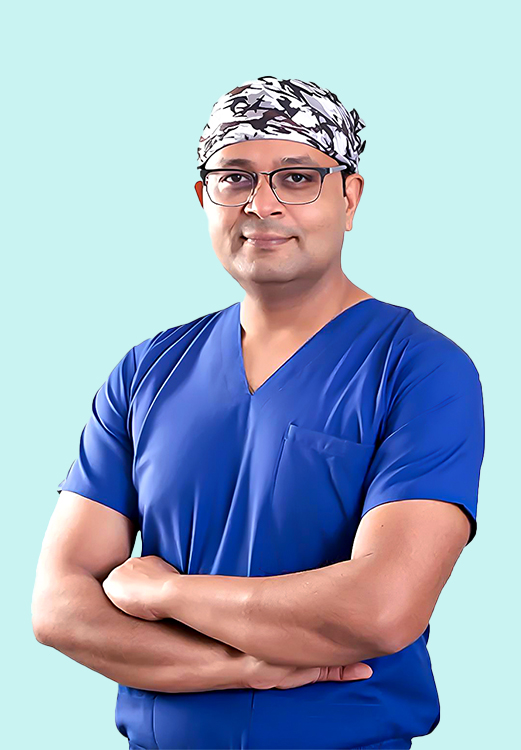
Medically reviewed by Dr. Himanshu Gupta.
Meet Dr. Himanshu Gupta, Orthopaedic Surgeon in Ghaziabad
Dr. Himanshu Gupta is an orthopaedic surgeon with 20+ years of experience and 15,000+ orthopaedic surgeries.
- Gold medallist from King George Medical College, Lucknow
- Fellowships including Asklepios Hospital, Mannheim, Germany
- Shoulder arthroscopy fellowship from the German Arthroscopic Association
Patients often look for a surgeon for knee ligament injury in Ghaziabad or a doctor for kneecap dislocation in Ghaziabad. Dr. Gupta assesses each of these and explains whether treatment is needed.
Cost of Dislocated Knee Care
Contact us for a personalised estimate after examination. You can ask for a written estimate and check insurance or cashless options.
The cost depends on:
- The type and severity of the dislocation
- Which ligaments or other structures are injured
- Surgical or non-surgical treatment, and the method used
- MRI and other investigations
- Hospital stay, if applicable
- Rehabilitation sessions
Injury Prevention Tips for Athletes
Warm up
10–15 minutes of dynamic stretches, such as leg swings.

Strength work
Squats, lunges and hamstring exercises to support the knee.

Safe technique
Avoid twisting and awkward landings in cricket, football and basketball.
Footwear
Supportive shoes with good grip, especially on uneven fields.

Diet and rest
Protein-rich foods and enough rest to avoid overuse.
Visit Amicare Sports Injury & Robotics Centre
Book your knee assessment at our sports injury centre in Indirapuram, Ghaziabad.
Plot No. 15/16 Nyay Khand-1, Near Indirapuram Public School, Indirapuram, Ghaziabad – 201014
Monday -Sunday , 7 am – 8 pm
FAQs on Dislocated Knee
What is knee dislocation?
A dislocated knee means the thigh bone and shin bone have moved out of their normal position. It is an urgent injury that often damages ligaments, nerves or blood vessels.
What are the symptoms of a dislocated knee?
Severe pain, a pop at the time of injury, visible deformity, swelling, difficulty bearing weight, and sometimes numbness or a cold, pale foot. Go to an emergency department straight away.
How long is the recovery time for a dislocated knee?
It depends on the injury and treatment, but recovery often takes 6–12 months or longer. Return to sport depends on strength, stability and medical clearance.
Is dislocated knee surgery a major procedure?
It is a significant operation done under anaesthesia and can involve several ligaments. Your surgeon will explain the method, risks and rehabilitation before you decide.
What causes knee dislocations in sports?
Strong forces such as a hard tackle, a heavy fall, a hyperextension injury or a landing from a jump. Road accidents are also a common cause.
Can I return to sports after a knee dislocation?
Many people return to sport after proper treatment and rehabilitation, but some need to change their level or type of activity. Your doctor will decide when it is safe.
What are the types of knee dislocation?
Anterior, posterior, medial, lateral and rotatory, named by where the shin bone moves in relation to the thigh bone.
What is congenital knee dislocation?
It is a rare condition in which the knee is out of position from birth. Early assessment is important, and treatment ranges from casting or splinting to surgery.
Medical disclaimer: This content is for general information only and does not replace professional medical advice, diagnosis or treatment. Consult a qualified orthopaedic surgeon for an individual assessment.


