
An ACL injury can make sport and even normal daily movement difficult. At Amicare Sports Injury & Robotics Centre, we offer ACL reconstruction surgery in Ghaziabad to restore knee stability for footballers, cricketers, runners, and fitness enthusiasts.
ACL surgery in Ghaziabad is led by Dr. Himanshu Gupta, an orthopaedic surgeon with 20+ years of experience and 15,000+ orthopaedic surgeries. Our sports injury centre plans each knee injury treatment around your sport and your goals, with small-incision (keyhole) surgery where it is suitable.
20+ years of experience | 15,000+ orthopaedic surgeries
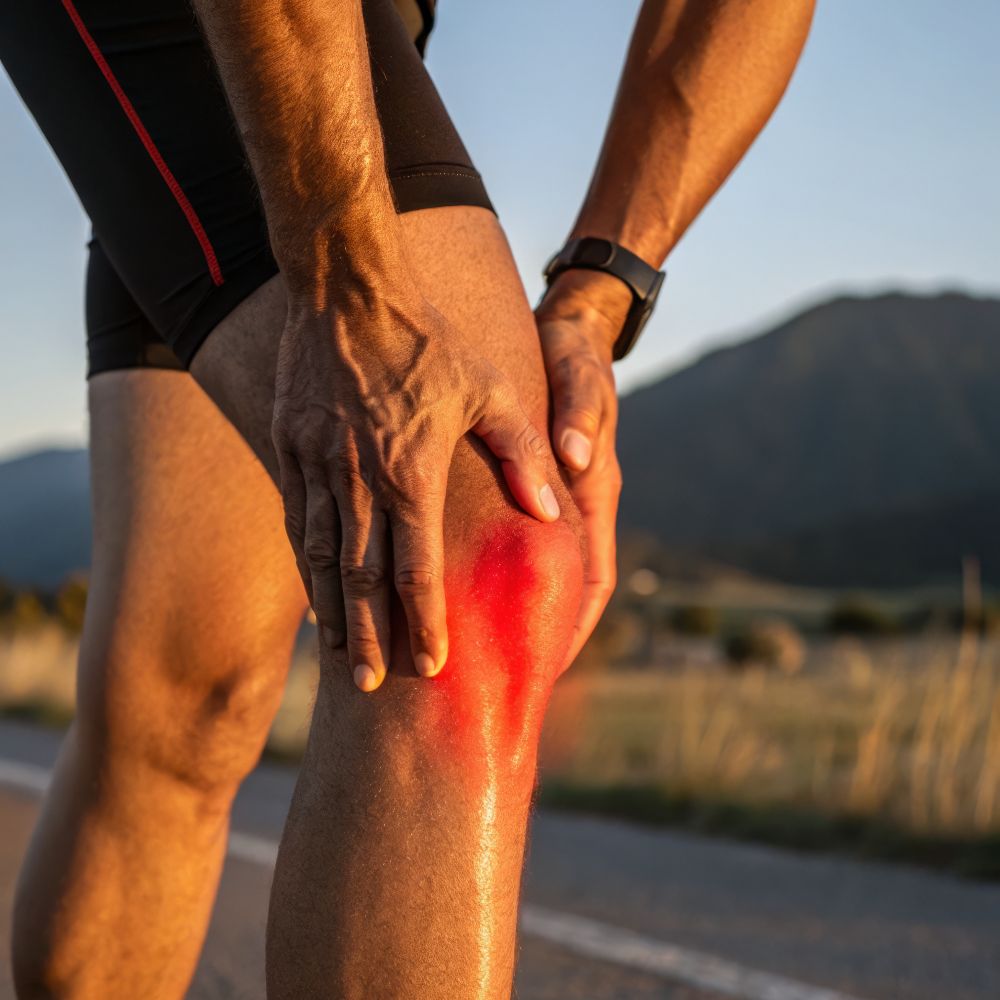
The anterior cruciate ligament (ACL) is a strong band of tissue inside the knee joint. It stops the shinbone from sliding forward and keeps the knee steady when you turn, land, or change direction.
An ACL injury happens when this ligament stretches or tears, most often during a sudden stop, a jump landing, or a sharp twist, as in football, basketball, cricket, badminton, and kabaddi.
An ACL tear is one type of knee ligament injury. The knee also has the PCL, MCL, and LCL, and more than one ligament can be hurt at the same time. A tear can be partial or complete, and the treatment depends on which.
Know the signs of an ACL injury so you can get help in time.
Swelling often appears within a few hours of the injury.

Many athletes hear or feel a pop at the moment of injury.

The knee feels as if it will give way, or it cannot bear your weight during turns.

Difficulty straightening or bending the knee.
Not every knee injury is an ACL tear, so a proper examination matters.
See an ACL doctor in Ghaziabad or an ACL injury specialist in Ghaziabad if:
Timely assessment by an ACL injury doctor can protect the cartilage and meniscus.
ACL diagnosis at Amicare Sports Injury & Robotics Centre starts with a careful history and a hands-on examination. Dr. Himanshu Gupta then confirms the findings with scans and builds a plan for you.
How and when the injury happened, and what you play.
The Lachman and anterior drawer tests to check ligament stability.
MRI to see the ligament, cartilage, and meniscus, and X-rays to rule out a fracture.
Movement, strength, and stability of the knee.
Patients should also know the bad signs after ACL surgery, so that complications can be spotted early.
ACL reconstruction replaces a torn ligament with a graft. It is usually advised for a complete ACL tear in an active person, or when the knee keeps giving way. ACL arthroscopy, or keyhole surgery, uses small incisions and a camera, and is how most ACL reconstructions are done. Dr. Himanshu Gupta explains each step before surgery.
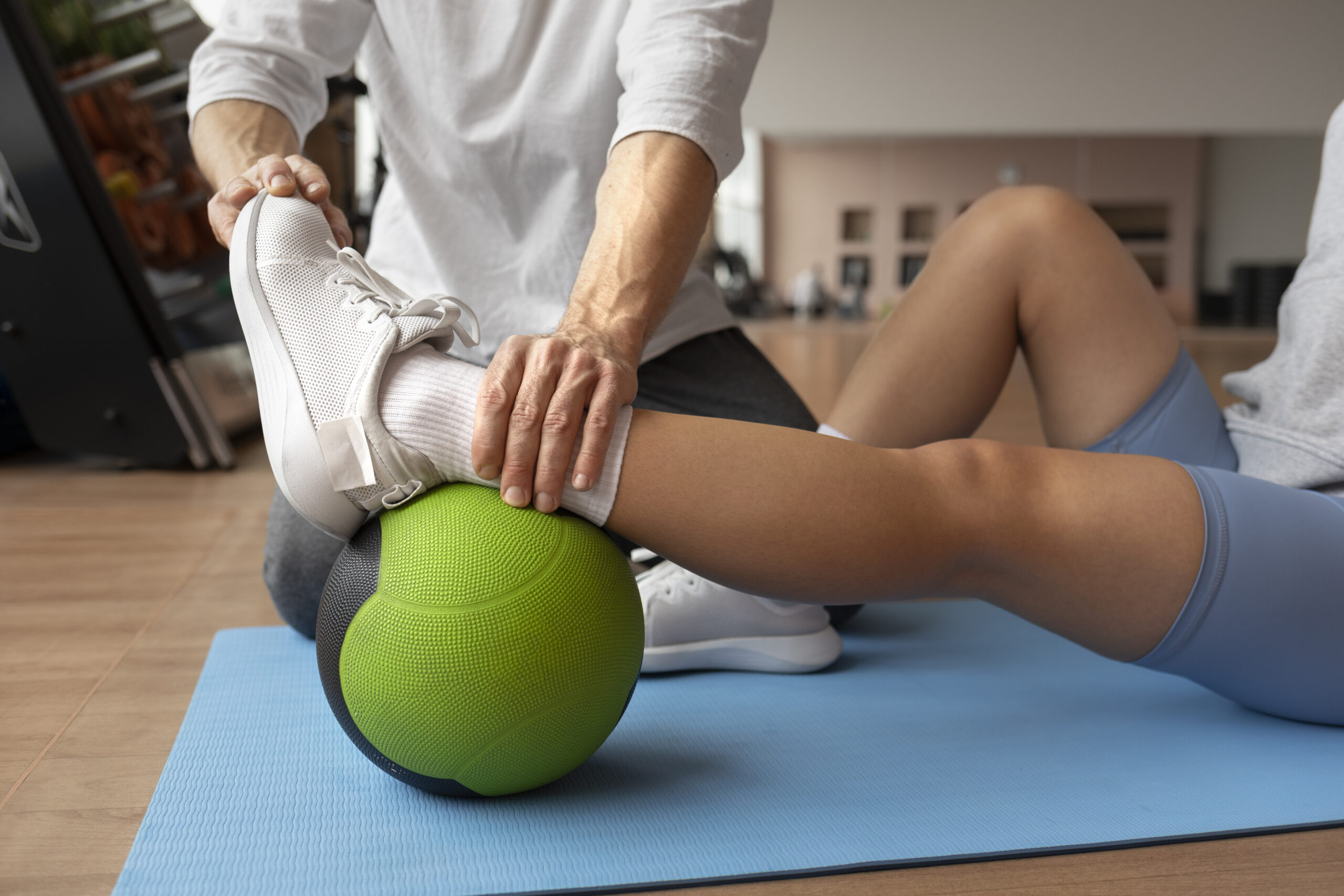
Not every ACL injury needs surgery. Partial ACL tear treatment, or care for less active patients, often starts without an operation. Dr. Gupta creates a plan that may include:

Exercises to strengthen the thigh and hip muscles and improve knee control.
A knee brace for support during daily tasks or light sport.

Platelet-rich plasma injections, sometimes considered for partial tears. The evidence for PRP in ACL injuries is limited, so your doctor will explain what to expect.
Avoiding twisting and pivoting sports while the knee heals.
Still unsure whether surgery is right for you? Book a consultation for a personalised plan.
The table compares ACL reconstruction with non-surgical care. Your doctor will advise what is right for you.
| Option | How it works | Suitable for | Typical recovery | Limitations |
|---|---|---|---|---|
| ACL reconstruction | The torn ACL is replaced with a graft, using keyhole surgery | Active people with a complete tear, or a knee that gives way | About 6–12 months | Surgical risks, and a long rehab |
| Physiotherapy | Targeted exercises to improve strength and control | Partial tears, or lower activity levels | About 3–6 months | May not provide enough stability for pivoting sports |
| PRP therapy | Injections to support healing | Selected partial tears, alongside physiotherapy | Varies | Limited evidence, and less likely to help a complete tear |
| Bracing | A brace supports the joint | Short-term support, or non-surgical candidates | Varies | Does not restore full stability |
Recovery times vary with the injury, your age, and your rehabilitation.
ACL surgery recovery usually takes about 6–12 months, depending on your injury and your sport. ACL injury rehabilitation at Amicare Sports Injury & Robotics Centre is planned by Dr. Gupta and our physiotherapy team, with tests that check your readiness at each stage.
Rest, ice, and elevation to reduce swelling. Crutches may be used.
Light walking and range-of-motion exercises with a physiotherapist.
Strength work, such as leg presses.
Running and sport-specific drills, such as agility work for footballers.
A gradual return to competitive sport, with balance and strength testing.
The ACL surgery recovery time depends on the graft, other injuries, and how closely you follow your rehab plan. Return to sport is based on strength and movement tests, not only on the calendar.
Amicare Sports Injury Centre was established in 2025 and has treated 2,000+ athletes, including 500+ championship players. The centre holds 20+ certifications and medical recognitions.

Dr. Himanshu Gupta has 20+ years of experience and has performed 15,000+ orthopaedic surgeries.
With a clear explanation of your MRI.

A physiotherapy floor, a strength zone and return-to-play programmes.
Non-surgical options are discussed, and second opinions are welcome.

Sport-specific prevention programmes for athletes.
Patients looking for an ACL specialist in Ghaziabad or an ACL surgeon in Ghaziabad can expect a full explanation of their options and the risks, so they can decide with confidence.
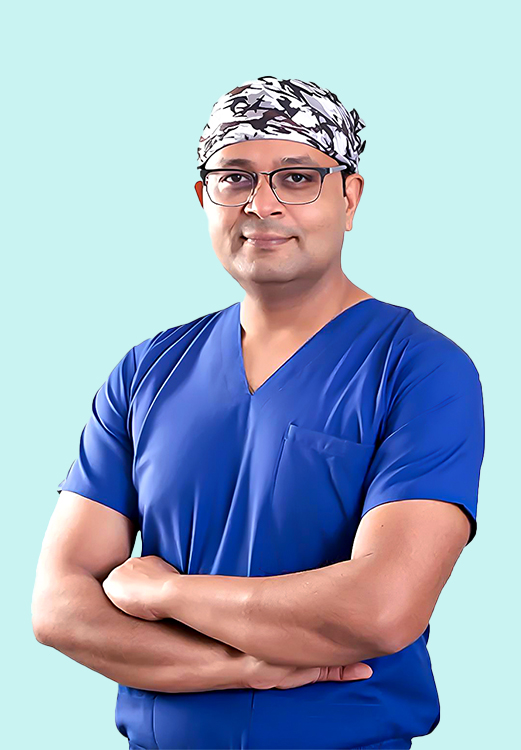
Medically reviewed by Dr. Himanshu Gupta.
Dr. Himanshu Gupta is an internationally trained orthopaedic surgeon with 20+ years of experience and 15,000+ orthopaedic surgeries.
For a personalised estimate, contact us. We explain the likely costs after your examination, and you can ask for a written estimate and check insurance and cashless options.
Preventing ACL injuries matters for every athlete. Dr. Gupta recommends:
Dynamic stretches, such as leg swings, before sport.

Squats and lunges to strengthen the muscles that support the knee.
Learn safe landing and turning movements.
Stop and get checked if the knee swells or feels loose.
Strengthen the back of the thigh.
Improve knee control.
Controlled jumps for agility, once cleared by your physiotherapist.
Do these exercises under supervision after an injury or surgery.
Book your ACL assessment at our sports injury centre in Indirapuram, Ghaziabad.
Plot No. 15/16 Nyay Khand- 1, Near Indirapuram Public School, Indirapuram, Ghaziabad- 201014
7 am – 8 pm
It is an operation that replaces a torn ACL with a graft, using small incisions and a camera. It is advised for a complete tear in an active person, or when the knee keeps giving way.
Common signs are a pop at the time of injury, quick swelling, and a knee that feels unstable. An MRI and a hands-on exam by an ACL doctor confirm the diagnosis.
Players in sports with jumping, pivoting, and sudden stops, such as football, basketball, cricket, badminton, and kabaddi, are at higher risk. Women athletes and people with weak hip and thigh muscles can also be more prone.
Torn ligament fibres do not usually heal fully on their own, but many partial tears do well with physiotherapy and bracing, especially in people who are not playing pivoting sports. Your doctor will judge this from your scan and your goals.
Often yes, once the swelling settles, but the knee may give way on turns and stairs. Don’t return to sport until an ACL injury specialist has checked it.
ACL surgery recovery usually takes about 6–12 months. Walking returns in weeks, and running and sport follow in stages once strength tests are passed.
The operation itself often takes about one to two hours, depending on the graft and any other repairs. You will usually spend a day or two in hospital.
It is a significant operation done under anaesthesia, but the keyhole technique uses small incisions. Like all surgery, it carries risks such as infection, stiffness, and graft problems, which your surgeon will explain.
Expect swelling, a brace, crutches, and pain control. You will start gentle movement exercises, and your team will check the wound and give you a written plan.
It depends on the graft, the method, any extra repairs, your hospital stay, and rehab. Ask for a written estimate after your examination.
Choose a surgeon who examines you, explains your scan, and discusses non-surgical options too. Dr. Himanshu Gupta leads Amicare Sports Injury & Robotics Centre and has 20+ years of experience and 15,000+ orthopaedic surgeries.
Message us on WhatsApp at +91 73032 57406, call the centre, or use the Schedule Your Consultation button.
Medical Disclaimer: This content is for general information only and does not replace professional medical advice, diagnosis, or treatment. Consult a qualified orthopaedic surgeon for an individual assessment before making decisions about ACL surgery or treatment.


Recover faster, play stronger. Advanced care for ACL tears, shoulder dislocations, ligament injuries, and more — all under expert hands and cutting-edge technology.
Fill the form and our team will get back to you shortly.