
If knee pain or stiffness is holding you back from sport, fitness or daily activities, knee cartilage repair may help restore your movement and confidence. At Amicare Sports Injury & Robotics Centre, we assess and treat knee cartilage damage in athletes, sports lovers and active people.
Our care is led by Dr. Himanshu Gupta, an orthopaedic surgeon with 20+ years of experience and 15,000+ orthopaedic surgeries. If you need a doctor for knee cartilage damage in Ghaziabad or a surgeon for knee cartilage repair in Ghaziabad, Amicare Sports Injury Centre builds a plan around your scan, your sport and your goals.
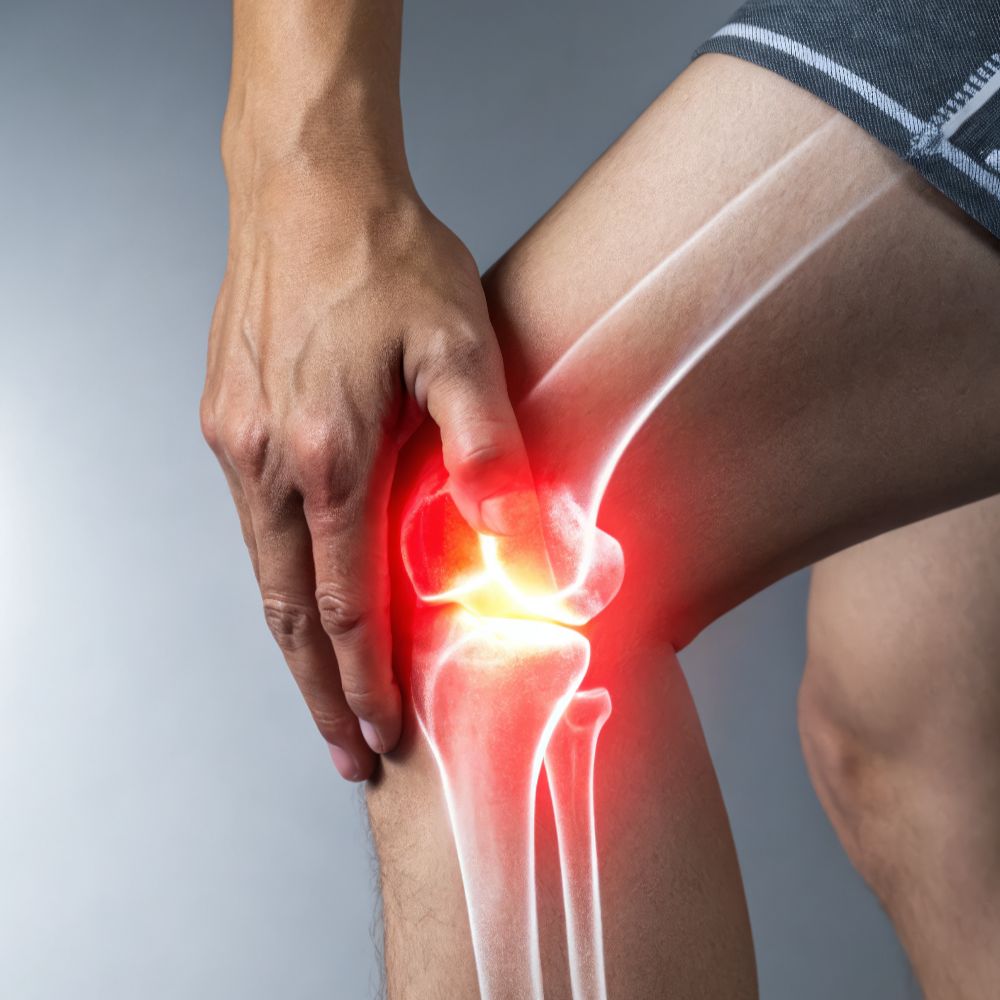
Cartilage is the smooth and soft structure which provides cushioning to your knee joint. Cartilage wears down due to sport injuries, aging and excessive use, and results in pain and restricted motion. Knee cartilage repair involves various techniques for cartilage repair, regeneration and induction which use physical therapy, injections or minimally invasive surgical procedure.
Cartilage does not have any direct blood supply, and hence it does not heal quickly or completely. This is the reason why it requires a thorough evaluation when there is any knee cartilage damage.
People often ask about the difference between cartilage and bone. Both are part of the knee joint, but they behave very differently.
| Bone | Cartilage | |
|---|---|---|
| Feel | Hard and rigid | Smooth, firm and flexible |
| Role | Supports your body and forms the joint | Covers bone ends, absorbs shock, lets the joint glide |
| Blood supply | Rich, so it heals well | None directly, so it heals slowly |
| Nerves | Yes | Not in the cartilage itself, so early damage may cause little pain |
The bone and cartilage difference matters for treatment. A broken bone usually heals well with the right care, while damaged cartilage often needs help from procedures such as microfracture or grafts.
Knee joint is the point where thigh bone, shin bone, and patella join. The ends of these bones are covered with cartilage and in between the thigh and shin bones, there is a C-shaped cartilage cushion known as meniscus. Knowledge about the structure of bone and cartilage will help you understand the connection of one to another.
Knee joint ligaments (ACL, PCL, MCL and LCL) hold the bones together and keep the knee stable. Ligament, meniscus and cartilage injuries often happen together, so we examine them all. Learn more about knee ligament injury and meniscus tears.
Not everyone has every sign, and these symptoms can also come from other knee problems:
Accurate diagnosis is the foundation of successful treatment. Our approach includes:
Your sport, injury history and symptoms.
Knee movement, tenderness, stability and tests such as the McMurray test, which mainly checks for meniscus tears that often occur with cartilage damage.
Shows the bones, alignment and joint space. Cartilage does not show clearly on an X-ray, but a narrowed joint space can suggest cartilage loss, and X-rays also rule out fractures.
The best test for cartilage, giving detailed views of the knee, including cartilage, ligaments and meniscus.
How your knee performs in daily activities.
At Amicare Sports Injury Centre we tailor knee cartilage treatment to your age, the size of the damage and your activity. Not every patient needs surgery.
Repairs tears or smooths damaged areas through small incisions with an arthroscopic knee procedure.
Creating small holes in the bone to encourage new cartilage, mainly for small defects. This supports knee cartilage regeneration, though the new tissue is not identical to original cartilage.
Rebuilding larger damaged areas, for selected patients.
Surgery is done under anaesthesia. Your surgeon will explain the method, the risks and how long you may stay in the hospital.

Targeted exercises to strengthen the muscles that support the knee.
Platelet-rich plasma from your own blood. Evidence for cartilage is limited, and results are not guaranteed.
To ease pain and stiffness, as advised by your doctor.
To reduce swelling.

To reduce load on the knee while it settles.
Timelines are typical ranges only and vary between patients.
| Option | How It Works | Best For | Typical Recovery | Limitations |
|---|---|---|---|---|
| Cartilage surgery (repair or reconstruction) | Repairs or rebuilds damaged cartilage | Larger or severe damage | About 6–12 months | Needs surgery and long rehab |
| Microfracture | Stimulates new cartilage growth | Small damaged areas | About 6–9 months | Limited to small areas |
| PRP therapy | Injection to support healing | Mild, early-stage damage | About 1–3 months | Limited evidence; less effective in severe cases |
| Physiotherapy | Strengthens supporting muscles | Minor damage, prevention | About 2–4 months | Does not repair cartilage |
Recovery depends on the treatment and the size of the damage. This is a guide only, and your surgeon and physiotherapist will set your timeline.
Rest, ice, compression and elevation, crutches if needed, and pain managed with medicines.
Light walking and gentle stretches, possibly with a brace. PRP therapy treatment may be considered for selected patients.
Strength work such as leg presses, squats and hamstring curls.
After some procedures, such as microfracture, you may need to limit weight-bearing for several weeks. Return to sport depends on strength, stability and medical clearance, not on time alone.
Side-to-side steps and quick turns, added gradually.

Low-impact cardio such as cycling or swimming first.
Looking for the best sports injury centre in Ghaziabad means looking for honest advice and clear explanations. Amicare Sports Injury Centre was established in 2025 and has treated 2,000+ athletes, including 500+ championship players. The centre holds 20+ certifications and medical recognitions.
With a clear explanation of your MRI.

Surgical and non-surgical options discussed honestly, and second opinions welcome.
Rehabilitation and return-to-play planning for your sport.
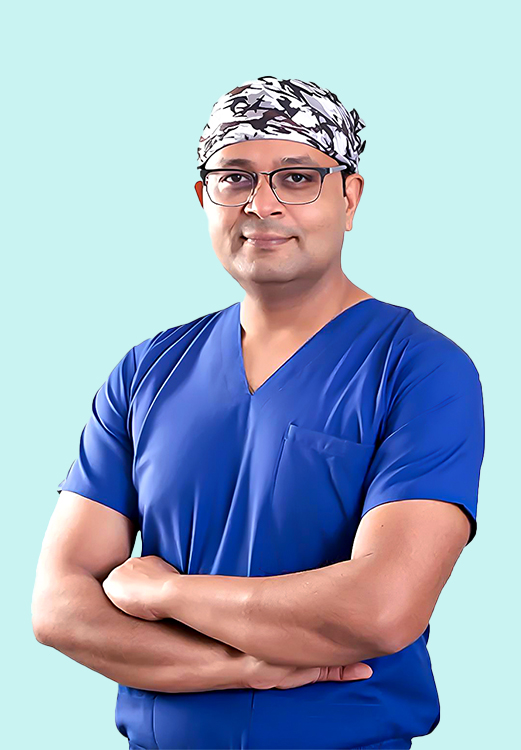
Medically reviewed by Dr. Himanshu Gupta.
Dr. Himanshu Gupta is an orthopaedic surgeon with 20+ years of experience and 15,000+ orthopaedic surgeries.
Patients often search for a doctor for cartilage repair in Ghaziabad or a surgeon for knee cartilage surgery in Ghaziabad. Dr. Gupta examines your knee and explains whether treatment is needed.
We will offer you an individualised quotation following your diagnosis. You may request a quotation in writing.
Warm up for 10–15 minutes.

With squats and lunges.
During sport and training.
For grip and support.
To avoid overuse.
Regular low-impact exercise helps protect cartilage.
Book your knee cartilage assessment at our sports injury centre in Indirapuram, Ghaziabad.
Plot No. 15/16 Nyay Khand-1, Near Indirapuram Public School, Indirapuram, Ghaziabad – 201014
Monday-Sunday , 7 am – 8 pm
It is a group of treatments that repair or rebuild damaged cartilage, or encourage new cartilage to form, using exercises, injections or keyhole surgery.
It depends on the severity of the damage, the treatment, the technology used, any hospital stay and rehabilitation. Ask for a written estimate after your examination.
Cartilage has a limited ability to heal because it has no direct blood supply. Small areas may settle with rest and physiotherapy, but larger damage often needs treatment.
It is a widely used treatment, but like all surgery it carries risks such as infection, stiffness and blood clots. Your surgeon will explain them before you decide.
It ranges from a few months to a year, depending on the treatment. Return to sport depends on strength, stability and medical clearance.
Bone is hard, has a rich blood supply and heals well. Cartilage is smooth and flexible, covers the bone ends, and heals slowly. The bone and cartilage difference is why cartilage damage often needs specific treatment.
Not directly. An X-ray shows bone and joint space, and an MRI is usually needed to see cartilage clearly.
Many people do after proper rehabilitation, but it depends on the injury and your recovery. Your doctor will decide when it is safe.
Choose a surgeon who examines you, explains your scan and discusses non-surgical options too. Dr. Himanshu Gupta leads Amicare Sports Injury & Robotics Centre and has 20+ years of experience and 15,000+ orthopaedic surgeries.
Medical disclaimer: This content is for general information only and does not replace professional medical advice, diagnosis or treatment. Consult a qualified orthopaedic surgeon for an individual assessment.


Recover faster, play stronger. Advanced care for ACL tears, shoulder dislocations, ligament injuries, and more — all under expert hands and cutting-edge technology.
Fill the form and our team will get back to you shortly.